Activities

Home - Activities

Training
September 05, 2023

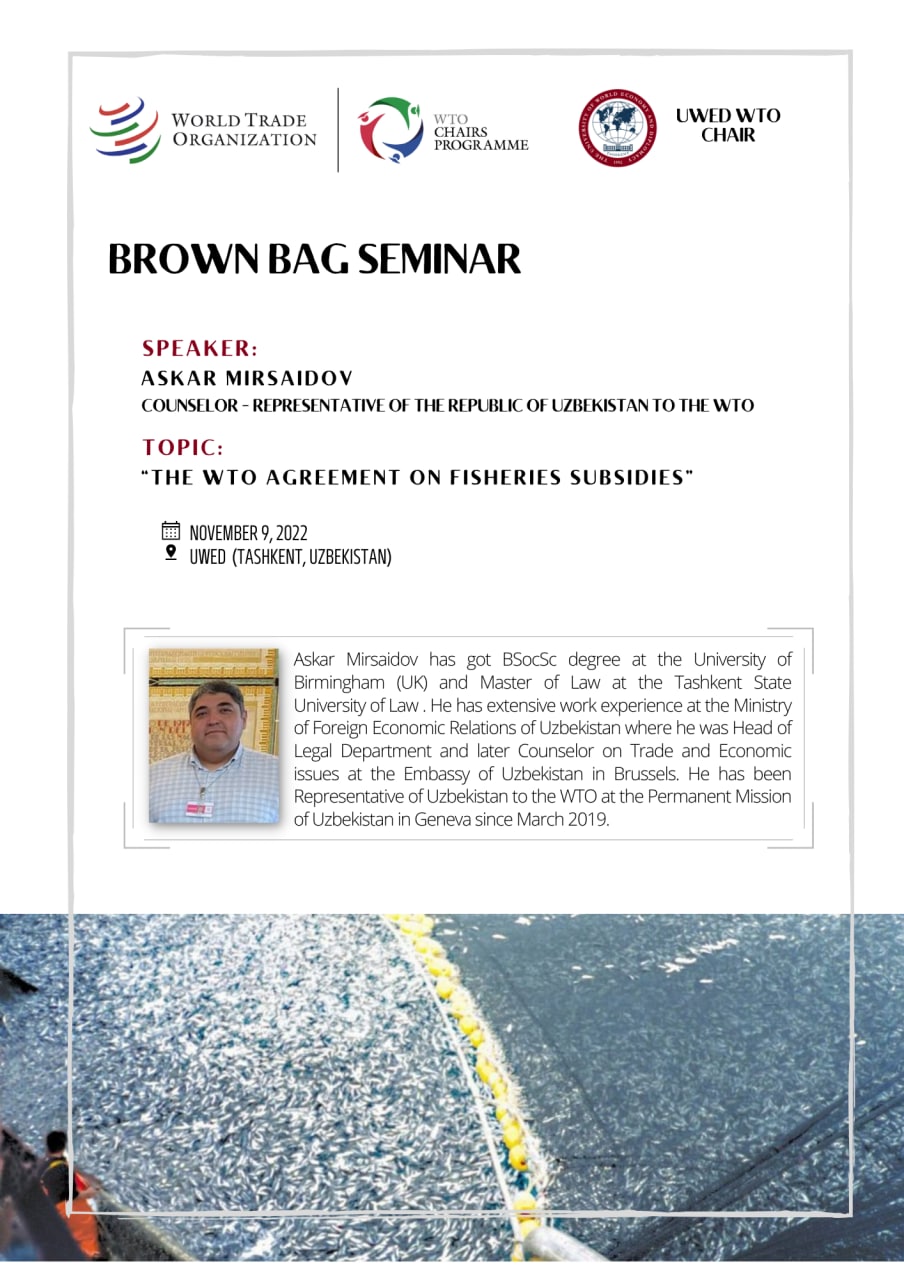
Brown-Bag Seminar on WTO Agreement on Fishery Subsidies by Mr. Asqar MIRSAIDOV, Counsellor-Representative of the Republic of Uzbekistan to the WTO (9/11/2022)

Brown-Bag Seminar on WTO Agreement on Fishery Subsidies by Mr. Asqar MIRSAIDOV, Counsellor-Representative of the Republic of Uzbekistan to the WTO (9/11/2022). Mr. Mirsaidov is the head of the Legal Department of the Ministry of Foreign Trade of Uzbekistan, he directs the work of the department, legal support of international economic cooperation of Uzbekistan, organizes activities for the development, coordination and submission to the Government of the Republic of Uzbekistan of legal acts, decisions of the President, Government, international agreements, conducts negotiations with international firms, companies and enterprises, as well as international organizations. He is also responsible for organizing consultations of the Government of Uzbekistan in the field of foreign trade law and participation in arbitration, disputes in ICSID, etc.
Previously, he worked at the Embassy of Uzbekistan in Belgium as an adviser on trade and economic issues and was responsible for the implementation of Uzbekistan's foreign economic policy in the Benelux countries, in accordance with international law, support for the development of mutually beneficial trade and economic, investment, financial, technical and technological cooperation with the Benelux countries.
From 2005 to 2012, he held various positions in the Ministry of Foreign Economic Relations.
Mr. Mirsaidov graduated from Tashkent State Institute, University of Birmingham, University of World Economy and Diplomacy. (Tashkent, Uzbekistan).

Training
September 04, 2023

Short-term training/Seminar on Trade Negotiations by Prof. Maarten SMEETS (19-23/09/2022) Meeting with the Representatives (lead by Mr. Farruh ZAKIROV then a Head of the Department) of the Ministry of Investment and Foreign Trade (23/09/2022)

Participants: Training for a group of professors and students (undergraduate, graduate) of the UWED, as well as for specialists from state bodies (Ministry of Investment and Foreign Trade).

In the week of 19-23 September, Maarten SMEETS (PhD) conducted a 25-hour course on trade negotiations and negotiating techniques at the University of World Economy and Diplomacy (UWED), jointly organized by the World Trade Institute and the WTO Chairholder, Umid YAKUBKHODJAEV.

The training was organized within the project: “Facilitating the Process of Uzbekistan’s accession to the World Trade Organization”, which is funded by the European Union and implemented by the International Trade Centre (Geneva, Switzerland) in cooperation with the Ministry of Investments and Foreign Trade of the Republic of Uzbekistan.

Course participants included some 14 mostly last grade law students, with specialization in WTO law. The main goal of the course was to discuss and explain the key principles of the WTO and more specifically to gain a thorough understanding of how trade negotiations are conducted in the WTO. It included an analysis of the various techniques and approaches applied in negotiating trade agreements in todays’ increasingly complex and challenging trading environment and with members at different levels of economic development. Students learned how to open markets and liberalize trade through multilateral trade negotiations, as well as through plurilateral and sectoral approaches. The course combined theory and practice and identified the main issues and challenges in accession negotiations, with special reference to Uzbekistan It furthermore analyzed the obstacles encountered in specific areas of the DDA negotiations, reviewed and assessed the outcomes of previous rounds of trade negotiations, including MC-12 and assessed the determinants for success.

The students conducted several class exercises and case studies with a specific focus on Uzbekistan and completed quizzes to test their knowledge and assess their own progress made and knowledge acquired through the courses. The course was highly interactive with a lively student participation. Through debates, collective group work and questions and answers sessions, students learned about both the theory and practice of trade policies. They learned how various trade policy instruments have a different impact on trade and which instruments are more efficient and effective in achieving their intended goals. More specifically the discussions focused on the question how the instruments could be best put to use in meeting the government objectives to diversify the economy and integrate more fully into the WTO multilateral trading system. In doing so, students were acquainted with the key challenges that Uzbekistan faces in efforts to complete its accession to the WTO. Students learned about the multilateral and bilateral processes and the importance of the domestic reforms that countries need to undertake in order to meet the WTO legal commitments and obligations. Reference was made to other CIS countries that had successfully completed their accessions. Students are now better prepared to advise on trade policies and how to engage in trade negotiations.

Training
September 04, 2023

Short-term training/Seminar on “Trade in Agriculture” by Prof. Christian HÄBERLI and Umida HAKNAZAR (06-09/09/2022)

Participants: Training for a group of professors and students of the UWED, as well as for specialists from state bodies (Ministry of Investment and Foreign Trade, Ministry of Foreign Affairs, Ministry of Agriculture) on trade and agriculture issues under the WTO agreements.

On September 6-8, 2022, within the framework of the “WTO Chair at UWED” project, Professor Christian Häberli and Umida Haknazar conducted a training for a group of professors and students of UWED, as well as specialists from state bodies on trade and agriculture issues under the WTO agreements.

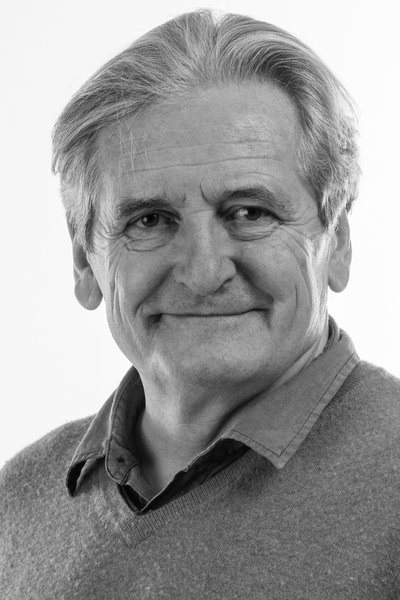
Christian Haberli

The professor has been a member of the World Trade Institute since 2007 and is a research and advocacy consultant in Europe, Asia, Africa and the Americas. He has produced over 70 publications on trade and investment issues related to agriculture, food security, climate change, employment, multilateral and regional trade. 

He received his PhD in 1977 with a dissertation on African Investment Law (University of Basel). He also holds university degrees in developmental sciences (Geneva, 1975) and theology (Bern, 2009). His professional career began in 1978 with the International Labor Organization (ILO) and the Swiss government based in Madagascar, Thailand, Nepal and Switzerland. Dr. Haberli was Switzerland's trade negotiator for the Uruguay Round of GATT (1986-1993) and the Doha Round of the WTO. He was Chairman of the WTO Committee on Agriculture (Regular Session, 2005-2007) and participated in twenty phases of work to resolve five disputes (bananas, apples, biotechnology, audiovisualization and country of origin labeling) in the WTO group list from 1996 to 2015 . Also, Prof. Haberly participated as Chairman of the Arbitration Board on the EU initiative on restrictions imposed by Ukraine on the export of certain wood products (2020). He has also been Chairman (every two years) of the Joint Committee on an Agricultural Agreement between Switzerland and the EU (from 2002 to 2007).

Training
July 28, 2023

Training course on ‘The Agreements on Technical Barriers to Trade and Sanitary and Phytosanitary Measures’

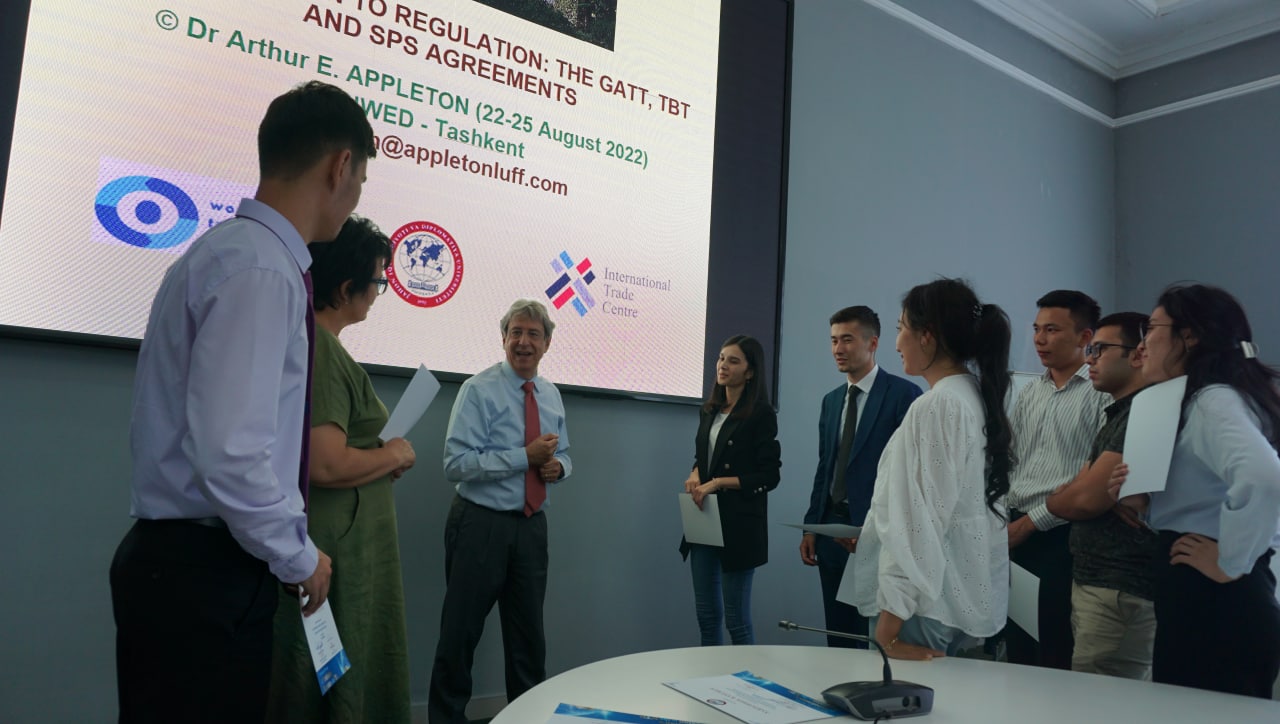
Training course on ‘the agreements on technical barriers to trade and Sanitary and Phytosanitary measures (TBT and SPS) in the presence of guest lecturer Arthur Appleton, J.D., Ph.D. (Partner in Appleton Luff – International Lawyers; Adjunct Professor, Johns Hopkins University School of Advanced International Studies) was held in August 22-25, 2022 at University of World Economy and Diplomacy and funded by the European Union and World Trade Center in cooperation with the Ministry of Investment and Foreign Trade of the Republic of Uzbekistan. On the tentative agenda of the training course two main issues (TBT and SPS) were brought to discussion.

The following topics were covered during the course:

  • The regulatory implications of GATT Articles I, III and XX: Why Members Regulate;
  • Introduction to non-tariff barriers and non-tariff measures ;
  • The scope of the TBT Agreement and its core legal principles: “non-discrimination”, “necessity”, “legitimate objectives”, “international standards”, “harmonization”, “mutual recognition”, “equivalence”, and “transparency” ;
  • Selected TBT jurisprudence;
  • The importance of food safety;
  • The SPS Agreement, its scope, and principal legal obligations (non-discrimination, necessity, science, harmonization, transparency, equivalence and mutual recognition);
  • Selected SPS jurisprudence.